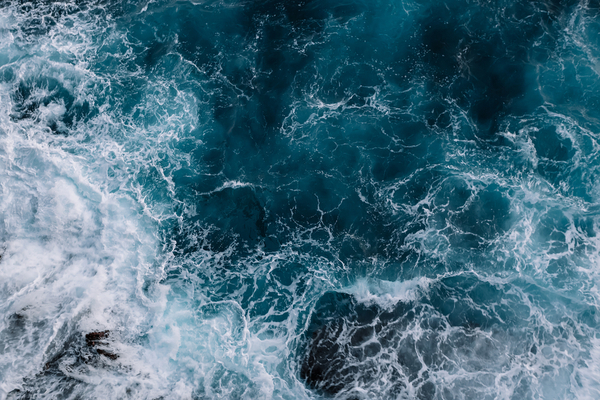
The water cycle, also known as the hydrologic cycle, refers to the continuous movement of water between the earth and the atmosphere. There are many components to the water cycle, but we’ll just break down the most important ones.
Evaporation and Transpiration
According to the National Weather Service (NWS), Evaporation is the process by which a substance changes from the liquid phase to the gas phase. On earth, the most important substance is water (liquid water into water vapor). Energy is required for evaporation to occur. Energy can come from the sun (radiation), the atmosphere (conduction) or the earth (conduction). When energy is extracted from the atmosphere to evaporate liquid water, the atmosphere will cool. This is also true if water evaporates off a surface. An example is when you step out of a pool on a warm, sunny day. The water on your skin will evaporate, removing heat from your skin, causing your skin to cool.
Evaporation is very important because it is how water vapor, which is needed for clouds and precipitation, enters the atmosphere. Transpiration is simply the evaporation of water through plant membranes. It is another important way in which water vapor enters the atmosphere.
Condensation
Condensation is the process by which a substance changes from the gas phase to the liquid phase. As air containing water vapor rises into the atmosphere, it will expand and cool. If it cools to its dewpoint temperature, the air will become saturated and condensation will occur. Condensation can be observed in the atmosphere as clouds, fog, dew, or frost form. When condensation occurs, the heat required to originally evaporate the water is returned to the atmosphere, causing the atmosphere to warm.
Precipitation
Clouds are composed of millions of water droplets that have condensed. These water droplets grow into larger droplets by colliding and coalescing with one another. Eventually, the droplets can grow large enough that they will not be able to stay suspended in the cloud. When this occurs, they fall out of the cloud as precipitation. If the cloud’s temperature is below freezing, it will contain ice crystals. Ice crystals collide and stick to other ice crystals and eventually fall from the cloud as snow. Precipitation is water, either liquid or solid, that falls from the atmosphere to the surface.
Runoff and Groundwater
Runoff and groundwater are both driven by precipitation. When precipitation falls to the surface, it will either be absorbed into the ground (groundwater) or, if the ground cannot absorb any more water, flow into streams. Eventually, even water that is absorbed into the ground will make its way into streams. The water in streams converges into rivers and flows back to the oceans. Finally, some of the runoff will be evaporated and some of the groundwater will be taken in by plants and then transpired.
—
Photo Credit: Ivan Kurmyshov / Shutterstock.com